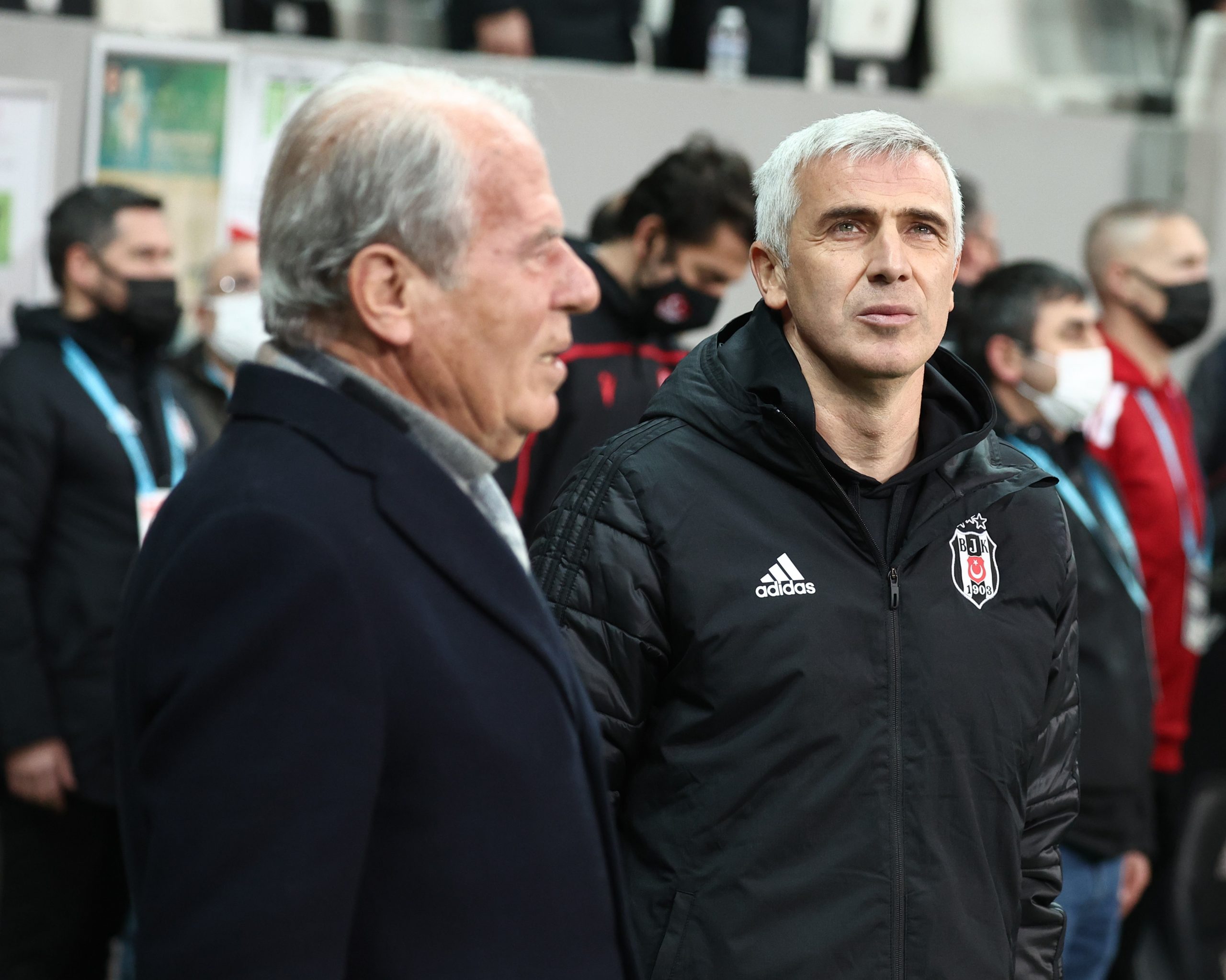
Besiktas Coach Karaveli Demands Improvement: "Game Must Get Better"
The spotlight is intensely focused on Turkish football giants Beşiktaş, with interim coach Önder Karaveli openly acknowledging the need for significant improvement in the team's performance. Following a recent setback that saw the Eagles register their first loss under his guidance, Karaveli's candid assessment, stating that the "Besiktas Spiel must get better," resonates deeply with fans and pundits alike. This declaration comes at a critical juncture, as the club navigates a demanding schedule, player injuries, and the ever-present pressure of competing at the highest level.
Karaveli, who stepped into the interim role, initially enjoyed a promising start with two wins and a draw. However, the recent defeat, described by the 47-year-old coach as a game of equals ultimately decided by a last-minute goal, has prompted a clear call for higher standards. His reflections shed light not just on a single match but on the broader expectations for the club's distinctive style and effectiveness on the pitch.
Karaveli's Candid Assessment: Unpacking the Call for Better Performance
Önder Karaveli's post-match analysis was a blend of objective observation and a firm demand for evolution. Reflecting on the match, he noted, "Perhaps we didn't deserve to win, but we didn't deserve to lose either." This sentiment highlights a common footballing dilemma where effort and chances don't always translate into results. Karaveli emphasized their tactical aim: "We didn't want Konyaspor to play their usual game." While they might have achieved this defensive objective to some extent, the critical failure lay in their own attacking execution and susceptibility to counter-attacks.
The interim coach was quick to dismiss common excuses. Despite the team's visible fatigue, likely a consequence of a relentless schedule, Karaveli asserted, "The tight schedule should not be an excuse, but both teams were exhausted today." This demonstrates a coach unwilling to allow external factors to overshadow the need for internal improvement. He pointed out the opponent's relatively harmless offensive efforts, yet still lamented, "However, we saw the ball in our own net after one of our unfinished attacks." This pinpoints a crucial area for development: the transition from attack to defense and the prevention of conceding from seemingly innocuous situations.
A key area of discussion surrounding Karaveli's decisions involves player selection. When queried about the absence of 18-year-old academy product Serdar Saatci from the starting eleven, especially given captain Domagoj Vida's recent patchy form, Karaveli, the former U19 coach, assured that Saatci would "soon be on the field." He also defended the current defensive setup, stating, "Moreover, there were no problems in defense." This indicates a careful approach to integrating youth while maintaining faith in established players, a delicate balance for any coach. Improving the overall Besiktas Spiel under these circumstances means not only tactical adjustments but also nurturing talent and managing player psychology effectively.
Beyond the Pitch: Referee Controversy and the Impact on Morale
The drama surrounding a football match often extends beyond the 90 minutes of play, and the recent fixture was no exception. While Önder Karaveli diplomatically sidestepped questions regarding the referee's performance, the social media sphere, as well as the players themselves, did not hold back. Intense criticism was directed at referee Mete Kalkavan and his officiating team, particularly after a controversial incident involving Barcelona-loanee Miralem Pjanic. Pjanic was on the receiving end of a harsh foul from Paul-Jose Mpoku, which remarkably only resulted in a yellow card.
Pjanic's frustration was palpable during post-match interviews, where he delivered a thinly veiled critique of the officiating: "We play, they decide." Such comments from key players highlight the deep impact refereeing decisions can have on team morale and the perception of fairness. While coaches often prefer to focus on what their team can control, the psychological burden of perceived injustices can undoubtedly affect future performances and the overall flow of the Besiktas Spiel. For a team striving to improve, dealing with such external frustrations adds another layer of complexity to their challenges. The focus must remain on their own game, but it's undeniable that external factors can test a team's resilience.
Navigating Injury Woes: The Immobile Setback and Squad Depth
Adding to Beşiktaş's recent struggles is the significant blow of losing star striker Ciro Immobile to injury. The news comes at an inopportune time, with the club having already suffered two consecutive defeats, putting a dent in their title aspirations. Immobile, a vital attacking force, had to withdraw from the league match against Kasimpasa (1:3) at halftime due to discomfort.
A subsequent medical examination at Acibadem-Altunizade Hospital confirmed a strain and bleeding in the right hamstring muscle (Semimembranosus) for the 34-year-old Italian international. The club's medical team has initiated treatment, but reports suggest the 2021 European champion will be sidelined for at least ten days. This means Immobile will miss crucial fixtures, including a UEFA Europa League encounter against Malmö FF and a league match against RAMS Basaksehir, before the international break provides a brief respite.
The absence of a prolific goalscorer like Immobile inevitably reshapes team tactics and places immense pressure on other forwards to step up. Coaches like Karaveli must swiftly adapt, perhaps by deploying a false nine, adjusting their wing play, or relying more heavily on midfield contributions for goals. This situation underscores the critical importance of squad depth, especially for teams competing on multiple fronts. Injuries can disrupt momentum and force strategic re-evaluations, making the coach's job even more challenging in maintaining a consistent and effective Besiktas Spiel. For more details on the impact of this injury, you can read our dedicated article: Besiktas Hit by Immobile Injury: Star Striker Out for Key Games.
Looking Ahead: The Path to a Stronger Besiktas Spiel
The road ahead for Beşiktaş is clear: the collective performance, or the "Besiktas Spiel," must evolve and strengthen. Karaveli's unwavering focus on improvement, coupled with the team's resilience, will be paramount. This includes not only tactical refinements but also fostering mental fortitude within the squad.
One area of continuous development is youth integration. Karaveli's previous role as U19 coach gives him unique insight into the club's emerging talents. His assurance that Serdar Saatci will "soon be on the field" suggests a thoughtful strategy for bringing in young blood. Developing academy players not only provides fresh energy but also ensures a sustainable future for the club's playing philosophy.
Furthermore, every match, whether a high-stakes league fixture or an international friendly, serves as an opportunity to refine the team's approach. Even historical pre-season encounters, such as the friendly against Slovakian second-division side FC Petrzalka in Wiener Neustadt, illustrate the club's commitment to preparation and international exposure. These games, often played in diverse locations like the Wiener Neustadt ERGO Arena, are vital for team cohesion and tactical experimentation, helping to mould the optimal Besiktas Spiel. For a glimpse into the types of international fixtures Besiktas engages in, you might find our previous coverage interesting: Besiktas vs Petrzalka in Wiener Neustadt: Match Preview. The ability to perform consistently across various formats and against different opponents is a hallmark of a truly great team.
For Besiktas, addressing key issues like clinical finishing, defensive concentration, and managing player fatigue will be crucial. The challenge for Karaveli and his staff is to instill a consistent level of performance that can overcome both internal setbacks like injuries and external pressures. The fans' expectations are always high, and the demand for a dominant and attractive Besiktas Spiel remains a constant driving force.
In conclusion, Önder Karaveli's frank assessment signals a period of introspection and hard work for Beşiktaş. The "game must get better" is not just a slogan; it's a strategic imperative for a club facing intense competition, managing key injuries, and striving to meet the high standards expected by its passionate fanbase. The path to achieving a consistently better Besiktas Spiel will require tactical acumen, robust player management, and an unwavering commitment to excellence from every member of the squad and coaching staff.